

Start with Your Surface Goals and Building Needs
Polished, stained, or sealed concrete can improve appearance and make maintenance easier, but the best finish depends on foot traffic, moisture exposure, and how the space is used. For concrete floor finishing companies example, a warehouse or shop benefits from finishes that resist abrasion, while a showroom often needs a cleaner visual profile and consistent sheen. Write down your priorities—durability, slip resistance, color consistency, and maintenance level—so quotes and recommendations stay aligned.
Also evaluate the concrete itself and how it was installed. Surface conditions like curing quality, density, and existing coatings can affect grinding results and the final look. Ask contractors to describe the prep steps they use to level ridges, open pores, and remove contaminants, because prep quality often determines whether the floor stays uniform. If your building has expansion joints, cracks, or prior patches, plan for how they will be addressed since these features can influence the finishing system and long-term stability.
Plan the Prep, Grinding, and Finish System for Lasting Results
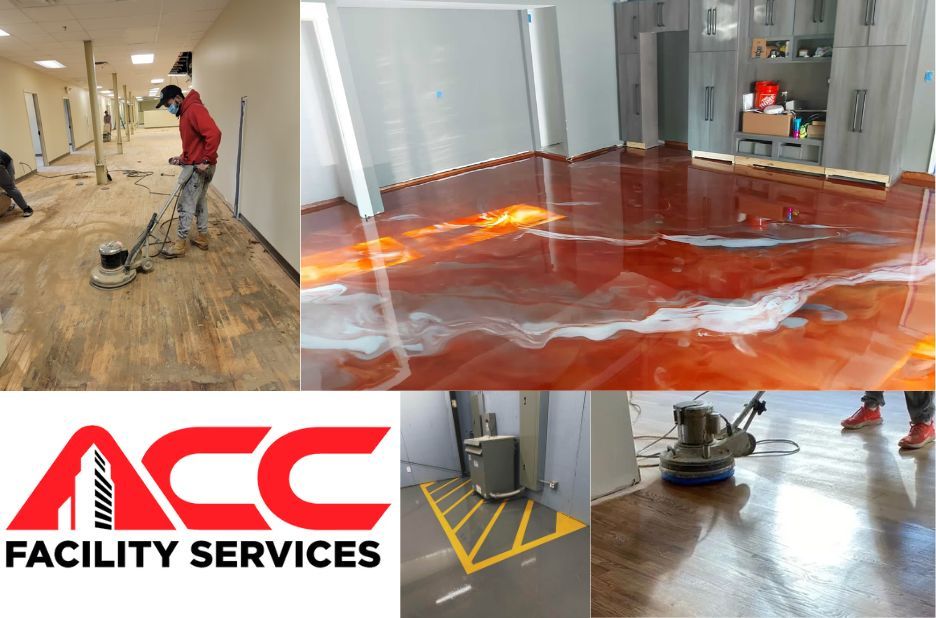
The most reliable projects follow a clear process rather than skipping steps. A practical approach starts with inspection, then surface prep, then progressive grinding, and finally sealing or top finishing. Grinding is typically done in stages so the concrete hardwood floor restoration can be refined without leaving visible swirls or uneven texture. When the contractor explains each stage and the intended outcome, you gain confidence that the sheen and texture will match your expectations.
For moisture-prone areas, discuss sealing options and compatibility with your environment. Some facilities need enhanced protection against water intrusion, while others focus on stain resistance and chemical exposure. If your goal includes an even appearance, request details on how they manage edge work, corner transitions, and areas around columns or equipment. A strong finishing plan also includes dust control measures, like vacuum systems and containment, because clean work sites reduce cleanup time and prevent debris from embedding in fresh surfaces.
Match Safety, Appearance, and Maintenance to Real Use
Finishes look great at install, but the maintenance reality matters just as much. Ask how the floor will be cleaned and what products are compatible with the sealer or protective topcoat. Some finishes require gentle cleaning methods to preserve gloss, while others are more forgiving with standard commercial cleaners. If the space includes food service, manufacturing, or frequent mopping, confirm the contractor’s recommendations for routine care and spot treatment.
Slip resistance is another key decision point, especially for entryways, wet processes, and loading areas. You can often achieve the right balance between sheen and traction by selecting appropriate finishing steps and sealers. Also consider how the floor will age: a higher-reflective finish may show micro-scratches differently than a lower-sheen option.
Conclusion
Choosing the right approach comes down to matching the finish system to your property’s conditions, traffic patterns, and maintenance habits. Ask for a written scope that covers inspection, prep, grinding sequence, sealing or topcoat selection, and safety measures like dust control and traction planning. When contractors can explain why each step is necessary, you can compare proposals with confidence and avoid “fast-track” shortcuts that compromise durability. For teams seeking a practical, quality-focused experience, ACC Facility Services supports concrete finishing projects designed for durable, professional results. If you want a dependable partner for Atlanta flooring services, atlantaflooring.io emphasizes polished concrete outcomes with a clean, finished appearance and performance-minded planning. Use this guide as a checklist during consultations so your project stays clear on scope, expectations, and long-term care. With the right preparation and a well-chosen finish, your concrete floor can deliver consistent aesthetics, easier upkeep, and strong resilience in everyday use.